210D and 600D RPET woven from recycled plastic bottles — sourced from GRS-certified suppliers with Transaction Certificates per order — plus organic cotton canvas and jute. What each fabric feels like, what it costs, and how to verify the recycled claim. From 1,000 pieces with your logo.

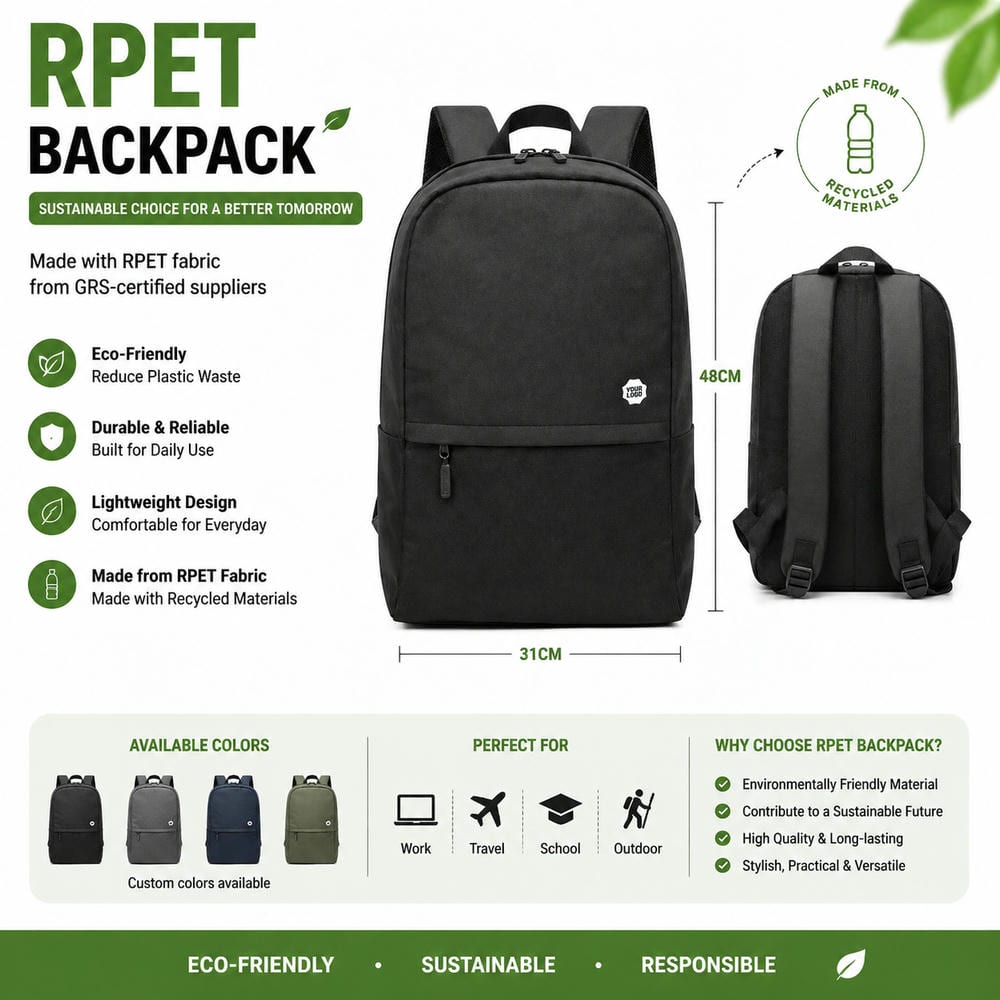
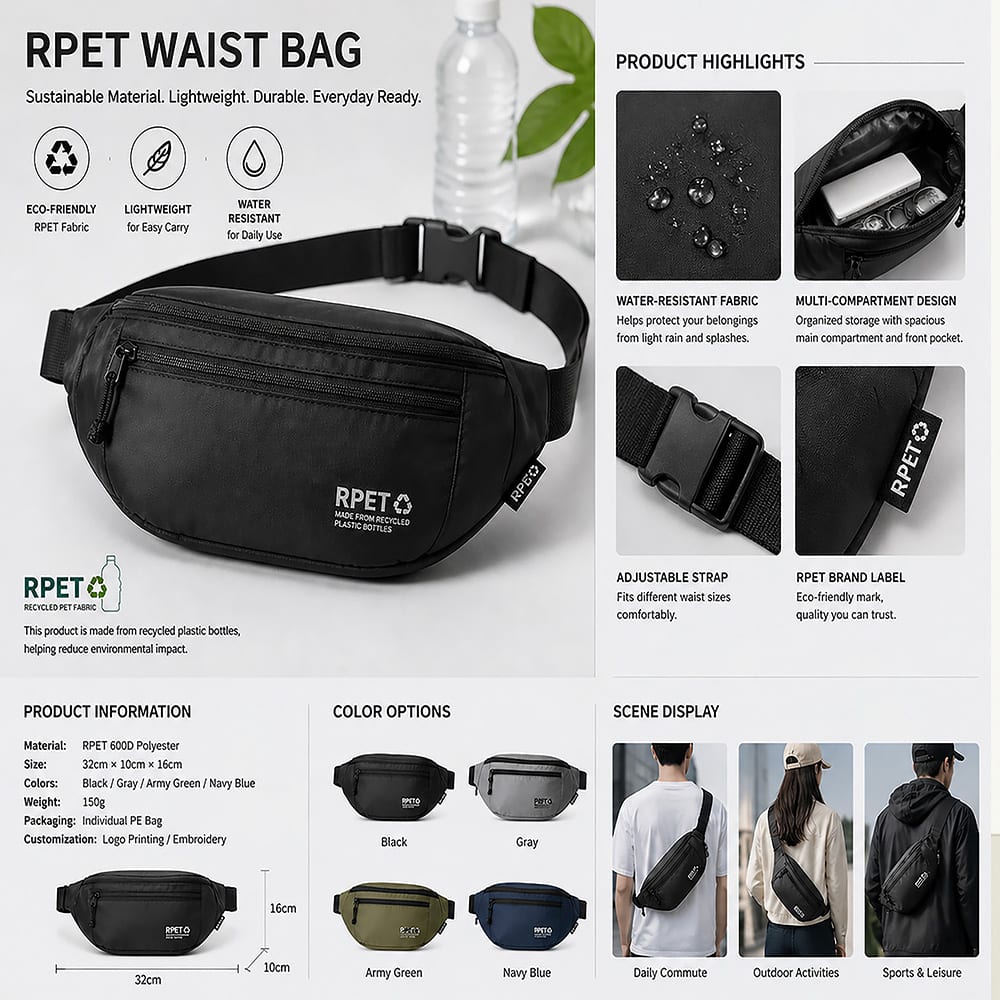
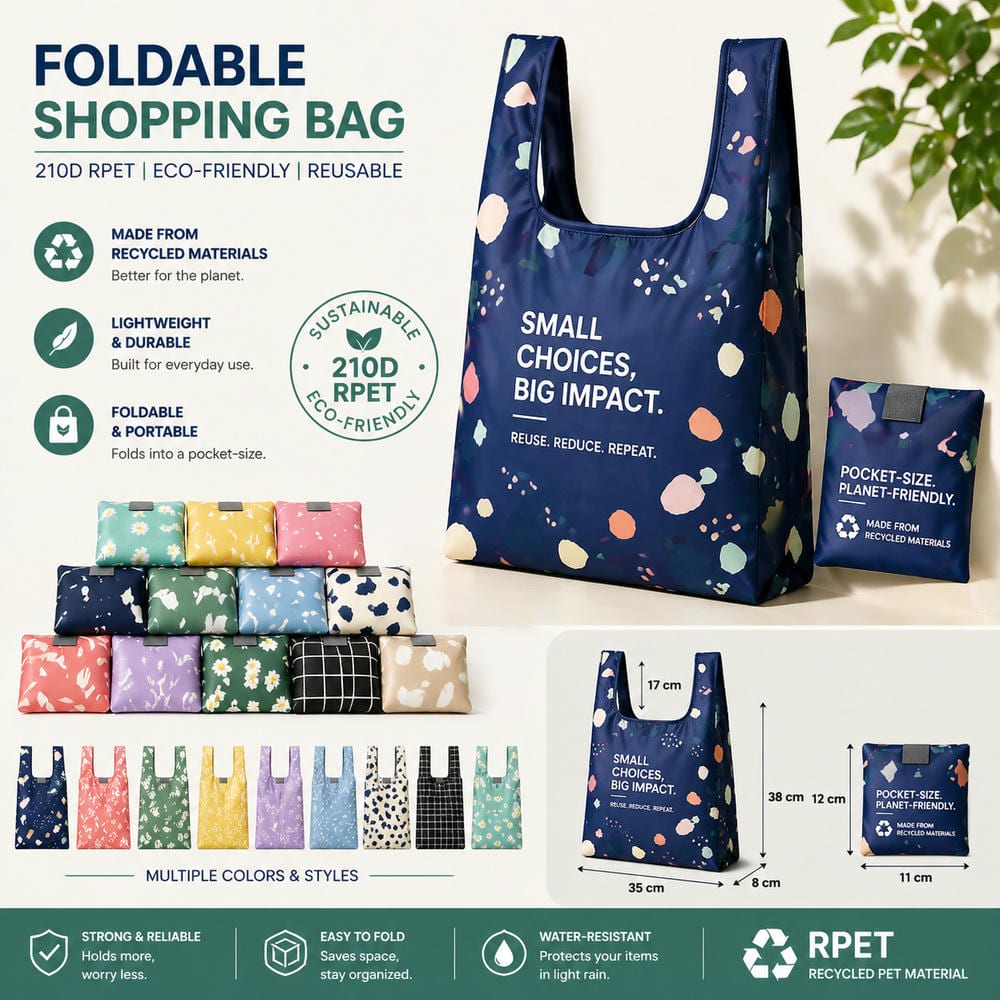
RPET is polyester re-spun from recycled plastic bottles: cleaned, flaked, melted into chips and woven into the same 210D and 600D fabrics used in everyday bags — identical strength, water resistance and print quality, with a far smaller footprint. Our RPET comes from GRS-certified textile suppliers (Taizhou Hengrong Textile among them), with Transaction Certificates available per order. We are transparent about the chain: the recycled content is certified at the fabric level; factory-level GRS at YCT is not currently in place. Alongside RPET we run organic cotton canvas and natural jute — all brandable from 1,000 pieces.
| Fabric | Feel & performance | Eco story | Best for |
|---|---|---|---|
| 600D RPET | Identical to standard 600D polyester — structured, abrasion-resistant, water-resistant | ~12–15 bottles per backpack; GRS-certified supplier chain | Backpacks, waist bags, laptop bags |
| 210D RPET | Light, foldable, quick-dry | ~4–6 bottles per bag | Foldable shoppers, packable totes, giveaways |
| Organic cotton canvas | Natural hand-feel, takes screen print beautifully, ages well | Biodegradable, plastic-free | Retail totes, gift & bookstore programs |
| Natural jute | Structured, rustic texture, very strong | Fast-renewable fiber, biodegradable | Grocery totes, wine bags, market bags |
Almost any style in our 173-style shelf can be rebuilt in RPET — same pattern, recycled yarn. Ask for "RPET version" with the style code.
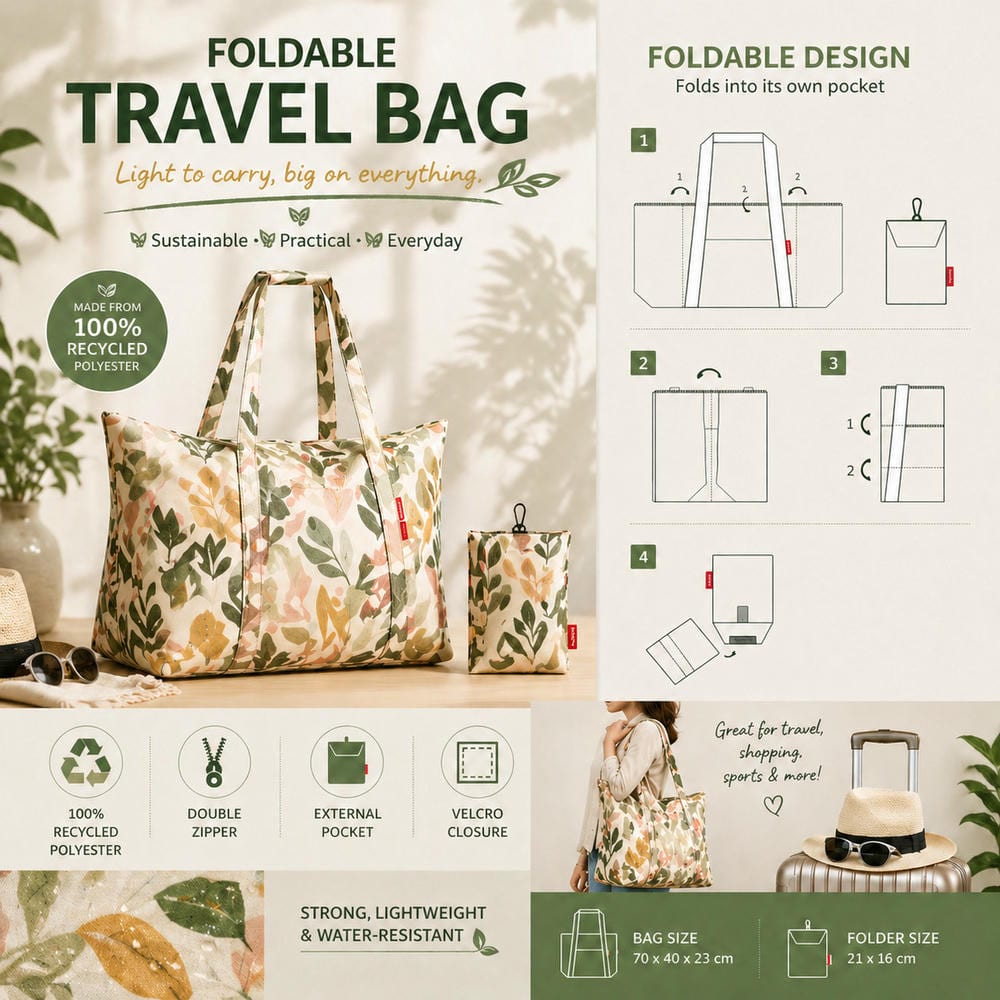
Four RPET builds ready to sample — ask by code and a sample plan comes back the same day.
YT-RPET-01
YT-RPET-02
YT-RPET-03
YT-RPET-041. Ask for the GRS scope certificate of the fabric supplier — the Global Recycled Standard verifies recycled content plus chemical and social criteria across the textile chain. Ours: RPET sourced from GRS-certified suppliers, certificates shared on request.
2. Ask for a Transaction Certificate (TC) covering your order's fabric lot — this ties the certified fabric to your actual production, not just the supplier's letterhead.
3. Be wary of factory-level claims. A sewing factory calling itself "GRS certified" without a scope certificate is a red flag. We state our chain honestly: certified at the fabric level, TCs per order, factory-level GRS at YCT not currently in place. That honesty is verifiable — and it's how serious eco programs buy. More on vetting suppliers in how to verify a bag factory.

Polyester re-spun from recycled plastic bottles — cleaned, flaked, melted and woven into standard 210D/600D fabrics. A backpack gives roughly 8–15 bottles a second life.
Yes — same denier, same strength, water resistance and print quality. Only the yarn origin differs.
GRS scope certificate of the fabric supplier + a Transaction Certificate for your order's lot. Both available here; factory-level GRS at YCT is not currently in place and we say so.
1,000 pieces per style; RPET, cotton and jute styles can combine into one eco program.
Style code (or "RPET version of YT-___"), quantity and logo in one message; prices and a sample plan come back the same day.
Message us on WhatsAppScan the QR code with WeChat to chat with us directly.